Victoria FallsThe Victoria Falls constitutes one of the most spectacular natural wonders of the world. The Local people call it "Mosi-oa-Tunya" -- the smoke that thunders and the Falls are remarkable.
There is a magic about them manifested in the towering column of spray when the river is high, the thunder of the falling water, the terrifying abyss and tranquil lagoons upstream in which hippo and deadly crocodiles lurk.The Victoria falls is 1 708 meters (about 5125 feet) wide, making it the largest curtain of water in the world. It drops between 90m (270 ft) and 107m (410 ft) into the Zambezi Gorge and an average of 550,000 cubic meters of water plummet over the edge every minute.
Remarkably preserved in its natural state, Victoria falls inspires visitors as much today as it did David Livingstone in the 1860's. The falls and the surrounding area have been declared National Parks and a World Heritage Site, thus preserving the area from excessive commercialization.


Seasons
The river's annual flood season is February to May with a peak in April. The spray from the falls typically rises to a height of over 400 meters (1,300 ft), and sometimes even twice as high, and is visible from up to 50 km (30 miles) away. During the flood season, however, it is impossible to see the foot of the falls and most of its face, and the walks along the cliff opposite it are in a constant shower and shrouded in mist. Close to the edge of the cliff, spray shoots upward like inverted rain, especially at Zambia's Knife-Edge Bridge.As the dry season takes effect, the islets on the crest become wider and more numerous, and in September to January up to half of the rocky face of the falls may become dry and the bottom of the First Gorge can be seen along most of its length.
The minimum flow, which occurs in November, is around a tenth of the April figure.

 Augrabies Falls
Few sights are as awesome or a sound as deafening as water thundering down the 56-m Augrabies Waterfall when the Orange River is in full flood. The Khoi people called it ‘Aukoerebis’, or place of Great Noise, as this powerful flow of water is unleashed from rocky surroundings characterized by the 18 km (54 ft) abyss of the Orange River Gorge.


Picturesque names such as Moon Rock, Ararat and Echo Corner are descriptive of this rocky region, characterized by the 18 kilometer (8 mile) abyss of the Orange River Gorge and craggy outcrops dominating scrub-dotted plains.


Klipspringer (a small buck species) and kokerboom (quiver trees) stand in stark silhouette against the African sky, silent sentinels in a strangely unique environment where only those that are able to adapt ultimately survive.

The 28 000 hectares on both the northern and southern sides of the Orange River provide sanctuary to a diversity of species, from the very smallest succulents, birds and reptiles to springbok, gemsbok and the endangered black rhino.
The most characteristic plant in the park is the giant aloe called quiver tree (kokerboom), Aloe dichotoma. The tree gets its name from the fact that the Bushmen (San) used the soft branches to make quivers for their arrows. The eye-catching silhouette of the quiver tree is typical of the Northern Cape landscape.
Of special interest in the Park are: The Falls, Moon Rock, Ararat, Arrow Point and Echo Corner.
Ramblers with limited time can take the very easy 2,5 km path to view the gorge, Twin Falls and Arrow Point. To reach Moon Rock takes about an hour and to the potholes about 1,5 hours.
Zasm WaterfallsFound on the way to Kruger National Park is situated on the Elands River in the heart of trout country and is about 50 ft high. If no rain falls in the region, it is liable to dry up as it did here.


The Victoria Falls is situated on the Zambezi river and is the source of the Cobora Bassa Hydro Electric scheme, built in 1975. For some more information here is a link:


 Their eggs are scattered just under the surface of the water.


 Body often banded and legs may be heavily cloaked in hairs. Fan of long hairs at the end of the often-slender abdomen.
 Excellent mimics of wasps and bees, day-flying but rarely encounted as they are never common and have a very rapid flight.
 Larvae are borers of trees and shrubs and, in temperote regions, may attain pest proportions in orchards.

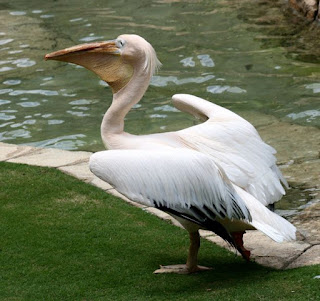
 Great White Pelicans breed in Africa, and in Europe and Asia from Greece to Vietman. The world's population is thought to total about 90 000 pairs, of which about 80% are in Africa.


 They also share a broadly similar diet (mainly insects) but differ ecologically in that Suricates locate much of their prey by digging, whereas Yellow Mongooses are surface foragers.

 This is a recent discussion I had with someone and I came to the conclusion that it could be for one or all of these reasons or maybe something entirely different:

 Although it has got larger, it is still under an inch in body length.


