Tuesday, November 8, 2011

Gold-haired Fruit Chafer (Xeloma tomentosa) Scarabaeidae

Gold-haired Fruit Chafer (Xeloma tomentosa)
 These are smallish beetles and identified by the dense golden hairs and brown and yellow markings.
 Mostly they can be found in the north and north-eastern parts of SA.
 The adults feed on flowers including sunflowers. This one below looks like it was having a snooze. :)

Sunday, November 6, 2011

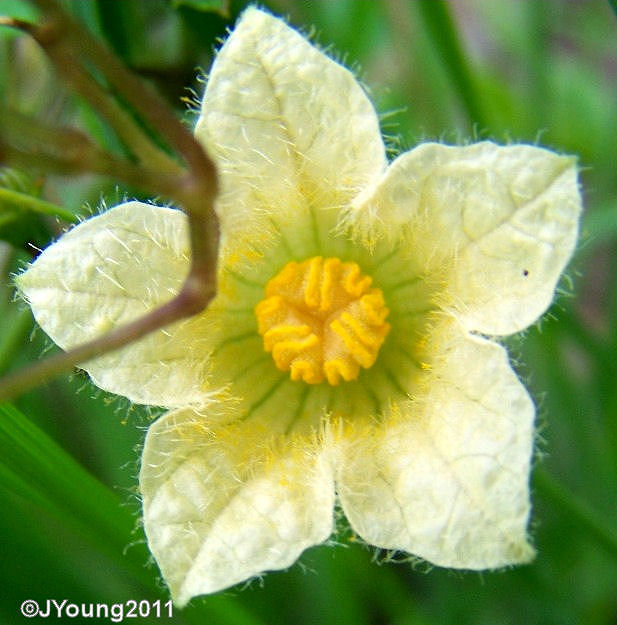
Sessile-leaved cucumber (Coccinia sessilifolia) Cucurbitaceae

The fruits ripen through yellow to red from the tip.
It is a herbaceous perennial climber with a tuberous rootstock.

 Both the fruit and the tuber are used as food by the San people, the fruit being best when still green and cooked as a vegetable.

The seeds of the ripened fruit are eaten by birds and so propagated.

These plants occur in grassland and bushveld.
 

Friday, November 4, 2011

Common Fungus-growing Termite – Odontotermes badius

Common Fungus-growing Termite – Odontotermes badius
Theses termites are fairly common in the northern parts of South Africa and are fairy large in size.
 They build their nests underground and can only be detected by slight soil elevation.


They are very destructive in that they forage on wood, dry dung and tree bark and love wooden homes.


The queen is hidden in a spherical clay cell in the central hive within which lies the fungus garden.

Wednesday, November 2, 2011

Common Flat Lizard (Platysaurus intermedius)

These are such stunning lizards and I was lucky enough to get pictures of both the male and female.

The Common Flat Lizard (Platysaurus intermedius) is a species of lizard in the Cordylidae family. This lizard has nine subspecies, all living in southern Africa.


Description
The females and juveniles of all subspecies of Platysaurus intermedius have black scales, with white stripes on the back. The bellies are brown, but the outer edge the belly is white. Adult males have different colorations for each subspecies.


Geography

Common Flat Lizards are the most widely distributed and common.These lizards live under exfoliating, or weathering, rocks. The preferred types of rock of this lizard are granite, sandstone, and quartzite. These lizards can be found in moderately moist savannahs, as well as rock outcrops. Its ranges throughout Zimbabwe, North Province, Mpumalanga, southern Malawi, eastern Botswana, Swaziland, Mozambique, and northern KwaZulu-Natal. This area includes the Kalahari desert, and several large river drainage systems.


Habits

Common Flat Lizards can be found in very large colonies. One example is Rhodes Grade, in Matopos, Zimbabwe. Two oval-shaped eggs are laid between November and December in a communal egg site for the colony. These communal egg sites are in a warmed crack in a rock. The hatchlings, which are 30-35 mm long, hatch in late December or January.


Common Flat Lizards can live about three years in captivity.


Common Flat Lizards have shown in tests that temperature does not effect their digestion efficiency.


P. i. intermedius is 85-90 mm long, and was the first subspecies of Platysaurus intermedius to be found. The heads and bodies are green or brown, along with nearly nonexistent spots and stripes. The tail, like many other lizards in the Platysaurus genus, is either red or yellow. The throat and the belly are blue, as many other males in this species.

Monday, October 31, 2011

Daddy Long Legs - (Pholcidae - Smeringopus)

Daddy Long Legs - (Pholcidae - Smeringopus)
The Pholcidae, or daddy long legs spiders, is a large family with a worldwide distribution. They are harmless to people as their jaws are unable to penetrate human skin and the venom dose is also too minute. Spider specialists are often asked if it is true that, of all the spiders, the pholcids have the deadliest venom and the only reason there are no human fatalities is because of the small size of the jaws. There is no documentation on this. The venom is possibly neurotoxic, although a few reported bites indicate that it may be mildly cytotoxic, and is deadly to the prey. The myth is possibly a misidentification with Loxosceles (the violin spider the culprit). The pholcids, as well as other spiders, should be encouraged in the home as they control various insect pests such as mosquitoes, flies, fishmoths, ants and moths.
 The Familial and generic name is derived from the Greek "pholkos" meaning "squint-eyed.


Other taxa commonly referred to as daddy long legs include: Opiliones (harvestmen - also arachnids), Tipulidae (craneflies) and Gerridae (pond skaters - hemipteran bugs that run on the water). The genus Loxosceles, as stated above, is often wrongly identified as a daddy long legs.

Pholcids hang inverted in what appears to be a messy, irregular, tangled web. These space-webs are constructed in dark recesses, in caves, under rocks and loose bark, abandoned mammal burrows. Pholcus and Smeringopus are synanthropic, occurring in undisturbed areas in buildings and cellars, hence the other common name, cellar spiders. The web has no adhesive properties but the irregular structure traps insects, making escape difficult. The spider quickly envelops its prey with silk and then inflicts the fatal bite. The prey may be eaten immediately or stored for later. When the spider is threatened by a touch to the web or when too large a prey hits the web, the spider becomes invisible by vibrating rapidly and becoming blurred. This blurring may protect the spider from spider hunting wasps (Pompilidae). When off their webs, pholcids walk with an unsteady, bobbing action.
 Certain species of these seemingly benign spiders are araneophagous and invade webs of other spiders and eat the host, the eggs or the prey. In some cases the spider vibrates the web of other spiders, mimicking the prey to lure the host of the web closer.


Pholcids are fragile spiders, the body being 2 to 10 mm in length and the legs are up to 30 mm long. Pholcus and Smeringopus have cylindrical abdomens and the eyes are arranged in 2 lateral groups of 3 and 2 smaller median contiguous (together) eyes. Artema and Spermaphora has a small globose (round) abdomen and its eyes are arranged in 2 groups of 3 and no median eyes. Pholcids are grey to brown with banding or chevron markings.

Pholcids are often confused with the violin spider (Loxosceles, family Sicariidae) but the latter does not occur in a web, is much more robust and is very agile on all surfaces. The false violin spider or leaf-litter spider (family Drymusidae) does occur in a web similar to that of the pholcids and in fact closely resembles them but are not often encountered.

The eggs of the pholcids have no protective sac but are held together as an agglutinated (glued together) mass (similar to balloons held together with a few strands of silk) and, as with the Scytodidae, are carried by the female in the chelicerae and are attached to the web while she feeds. The eggs hatch after 2 to 3 weeks and the spiderlings are either carried by the female for a few days or hang from silk strands in the her web. They mature after 5 moults.
Information supplied by:

Sunday, October 30, 2011

Tornado damage?

Tornado damage?? Unheard of!!
 
In all my years I have never heard of tornadoes in South Africa and now, within the space of a month, we have had two!! What is happening with this world of ours??


Even worse, is actually experiencing one and although this was small in comparison to what I have seen in pictures going through Tornado Alley in the USA, it sure caused a lot of damage and blew part of my house away!!

An extra room has been added to the house where I stay and it is made of wood. This morning we fount the missing part of the roof 300m (300 yards) away. It had flown over my car port thank goodness and not damaged my car, had cleared the trees and was laying in a huddled mess.

Needless to say, the inside of my house was a mess and I have spent 5 hours cleaning. To make matters worse, I am getting a guest today!! Could this not have happened last weekend or the next one!!

I must say that I am pleased for the rain though as it is two months overdue and the animals are dying. Luckily someone came over and helped me clear my things out of that room before the rain started so I have no personal damage!! What an experience!!

Saturday, October 29, 2011

Poison Bulb – Amaryllidaceae (Boophane didticha)

Poison Bulb – Amaryllidaceae (Boophane didticha)

This is an extraordinary plant to find and see for the first time. It is not very high so can be well hidden in the grass and one can easily pass it by.


I found a lovely book called Wild Flowers of South Africa by Braam van Wyk. It has great pictures and information in it so for anyone who is interested in this part of nature, do look for it at your local bookstore.

The flowers usually appear first and once it dies off, the plant has very distinctive fan-shaped leaves.

They grow in bushveld and grassland areas and the flowers are sweetly scented.


It has a bulb which is partly exposed above ground and larger bulbs are estimated to be several centuries old.


The bulb is considered poisonous due to the presence of alkaloids but has been widely used in traditional medicine as a dressing for wounds after being soaked in linseed oil.

Exposure to flowers may cause headaches thought to be caused by the penetrating scent.


Thursday, October 27, 2011

African Red Toad (Schismaderma carens)

The African Red Toad or African Split-skin Toad (Schismaderma carens) is a species of toad in the Bufonidae family.


It is found in South and Central Africa. Its natural habitats are dry savanna and moist savanna, subtropical or tropical dry shrubland, subtropical or tropical moist shrubland, subtropical or tropical dry lowland grassland, freshwater marshes, intermittent freshwater marches, arable land, pastureland, urban areas, water storage areas, ponds, canals and ditches, and man-made karsts.


It is identified by the two dark spots on its back.
Information supplied by:

Tuesday, October 25, 2011

Common Dwarf Mongoose (Helogale parvula)

Visiting Lynda (Mainly Mongoose) is always such a pleasure and a special treat for me was to go out with her to see how the mongoose were doing. She has a fantastic blog which she writes with a wonderful sense of humour and is full of interesting encounters in out African bush so do go and read Blog.

Physical Characteristics

The dwarf mongoose is the smallest of the African mongooses. It is stocky, with a fairly short, pointed muzzle and a long, fluffy tail. It is usually speckled brown or reddish in color.

Habitat

Mongooses are found in most parts of Africa. They vary greatly in their habitat and social organization. Most species are solitary, but others live in stable social groups. They can be found in a variety of habitats, including forests and semi-arid areas. Some species
 Behavior


Dwarf mongooses live in a group of 12 to 15 individuals, which covers a range of approximately 75 acres that overlaps with the ranges of other groups. A range usually contains 20 or more termite mounds, which are used as den sites, lookout posts and sources of food. The mongoose is nomadic, and groups seem to be constantly on the move through their range, seldom using a den site for more than a few days at a time.

Each dwarf mongoose group is led by a dominant female and her male consort, usually the oldest animals in the group. The rest of the group is composed of family members, generally older offspring of the dominant pair. Each year the alpha female produces three litters of young, with two to four infants in each litter. The young of the dominant female are second in the group’s social system, tended for and cosseted by subordinate members. However, this status is immediately lost upon arrival of a new litter. The babysitters, who guard and defend the young, change often during the day so that individuals may forage for food.

 Each dwarf mongoose pack has a dominant breeding pair, usually the oldest animals in the pack. Each year the female normally produces three litters of young, with two to four infants in each litter. Subordinate breeding females, which come into estrus at the same time as the dominant female, mate with subordinate males in the pack, but such matings seldom produce live young. It is not certain if they fail to conceive or abort early in pregnancy. In the rare instances when they do produce live young, the newborns are believed to either have died quickly or been killed.


The dominant female spends little time with her young other than suckling them; subordinate females tend to them. The babysitters change often during the day (even subordinate males will relieve them and take a turn) so they can forage for food. The babysitters guard and defend the young.
 Diet


Mongooses are mainly carnivorous-consuming small rodents, reptiles and young birds-but may include fruit and other foods in their diet. Dwarf mongoose mainly feed on insects like termites, locusts, beetles, grubs, larvae and spiders. When they forage, they keep in contact with short chirrup calls, one of many vocalizations they use. Although they often cooperate in hunting, adults generally do share food. They will, however, collect and carry insects to the young.

 Predators and Threats


The dwarf mongoose is eaten in some regions of Africa, and is sometimes persecuted as an egg thief despite its ability to keep rat populations down.

 Did You Know?


• Several other species of mongooses live in East Africa-the banded mongoose, slender mongoose, marsh mongoose, white-tailed mongoose and the large gray mongoose.


• Although the dwarf mongoose is a small, inconspicuous carnivore, it is a good example of how group cooperation improve a species' chances of survival

 Information supplied by:

Sunday, October 23, 2011

Southern Tree Agama (Acanthocercus atricollis)

It is very large, exceeding 35cm (13 inches) in length.

It is a robust lizard with a large head. Breeding males have bright blue heads and front limbs, with yellow and orange colouration on the back. The tail tip is often blue.

Females lay 5-14 eggs in soft soil. When they hatch three months later, the young are 7-8cm long.

Females are various shades of grey, with light green, orange and yellow markings on the back and bars on the tail.

In South Africa this agama occurs in the southern and in residential areas, it also utilizes perimeter walls where, during the breeding season, colourful males can be seen bobbing their heads to attract the females.

They spend most of their time on the trunks of trees, only coming down when they need to cross to another tree or to feed on flying ants and termites.

They also feed on grasshoppers, beetles and caterpillars. Breeding males will gape and bite readily if caught but are not dangerous to humans.
 Information from Johan Marais books on reptiles.
For more info: